
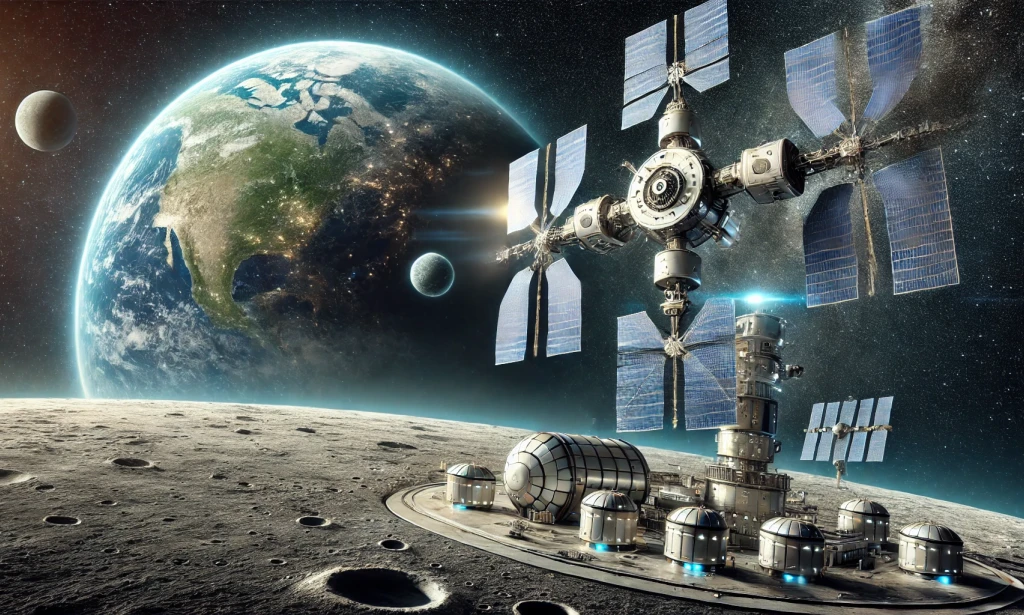
India is embarking on a remarkable journey into the future of space exploration with an ambitious plan to build a Moon-orbiting space station by 2040. This bold vision not only underscores the nation's growing technological prowess but also solidifies its position as a key player in the global space race. With the Indian Space Research Organisation (ISRO) leading the charge, this initiative represents a monumental step in India's space ambitions and the broader quest to explore and understand the cosmos.
Unveiling the Lunar Space Station Vision
The concept of a lunar space station is part of a broader strategy to extend human and robotic exploration beyond Earth’s orbit. India envisions its lunar station as an orbital platform that will facilitate advanced scientific research, technological innovation, and international collaboration. By 2040, the station is expected to serve as a hub for lunar exploration missions, enabling extended stays in lunar orbit and acting as a gateway for deeper space missions.
The lunar space station will also focus on critical scientific objectives, including studying the Moon's surface, conducting experiments in zero-gravity conditions, and exploring the potential for using lunar resources to support future missions. By achieving these goals, India aims to contribute significantly to global efforts in space science and exploration.
ISRO’s Achievements: A Foundation for Future Success
ISRO has consistently demonstrated its ability to achieve remarkable milestones with cost-effective and innovative solutions. From the Chandrayaan missions, which provided invaluable data on the Moon, to the Mars Orbiter Mission (Mangalyaan), which showcased India’s interplanetary capabilities, ISRO has laid a strong foundation for this next chapter in space exploration.
Chandrayaan-3’s successful soft landing on the lunar south pole was a particularly significant milestone, confirming the presence of water ice—a critical resource for sustaining future missions. This achievement, coupled with ISRO’s expertise in satellite development and launch vehicle technology, positions India well to tackle the challenges of building and operating a lunar space station.
The Roadmap to 2040
Building a lunar space station is a complex and multi-phase project. The roadmap to 2040 involves several key steps:
1. Advanced Satellite and Spacecraft Development
India plans to develop advanced spacecraft capable of carrying heavy payloads to lunar orbit. This includes designing robust modules for housing scientific equipment, astronauts, and other essential systems for long-term operations in space.
2. Next-Generation Launch Vehicles
ISRO is already working on next-generation launch vehicles like the Gaganyaan crewed spacecraft and the Small Satellite Launch Vehicle (SSLV). For the lunar station, new heavy-lift rockets with advanced propulsion systems will be critical.
3. International Collaboration
Recognizing the scale and complexity of this mission, India is open to collaborating with international space agencies and private companies. Partnerships with NASA, ESA, and other global players can bring in valuable expertise and resources to accelerate progress.
4. Infrastructure on the Moon
As part of the broader lunar exploration program, ISRO is also considering setting up surface infrastructure on the Moon, such as energy generation systems, communication networks, and research outposts to support operations from the space station.
5. Focus on Sustainability
The lunar space station will incorporate sustainable technologies, such as renewable energy systems and advanced recycling methods, to minimize the environmental footprint of space exploration and support long-term missions.
Overcoming Challenges
Building and maintaining a space station in lunar orbit presents significant challenges. These include the high cost of space missions, the need for advanced technologies to ensure astronaut safety, and the harsh conditions of space, such as radiation exposure and extreme temperature variations.
India is addressing these challenges through strategic investments in research and development. ISRO is already working on technologies like radiation shielding, autonomous systems for maintenance and repairs, and high-efficiency propulsion systems. Additionally, the agency plans to involve private companies and academic institutions in developing innovative solutions to complex technical problems.
The Impact of a Lunar Space Station
The establishment of a lunar space station by 2040 will have far-reaching implications. Beyond its scientific and technological benefits, the station will serve as a symbol of India’s growing capabilities in space exploration. It will inspire a new generation of scientists, engineers, and space enthusiasts, fostering innovation and economic growth.
On the international stage, the lunar space station will enhance India’s reputation as a leader in space exploration. By contributing to humanity’s collective efforts to explore the Moon and beyond, India will play a pivotal role in shaping the future of space exploration and utilization.
Conclusion
India’s plan to build a Moon-orbiting space station by 2040 is a bold and inspiring vision. It reflects the country’s commitment to pushing the boundaries of science and technology while addressing global challenges through innovation and collaboration. As ISRO and its partners work tirelessly to turn this vision into reality, the world watches in anticipation of the transformative discoveries and advancements that lie ahead. With this mission, India is not just reaching for the Moon—it is reaching for the stars.

You must be logged in to post a comment.