
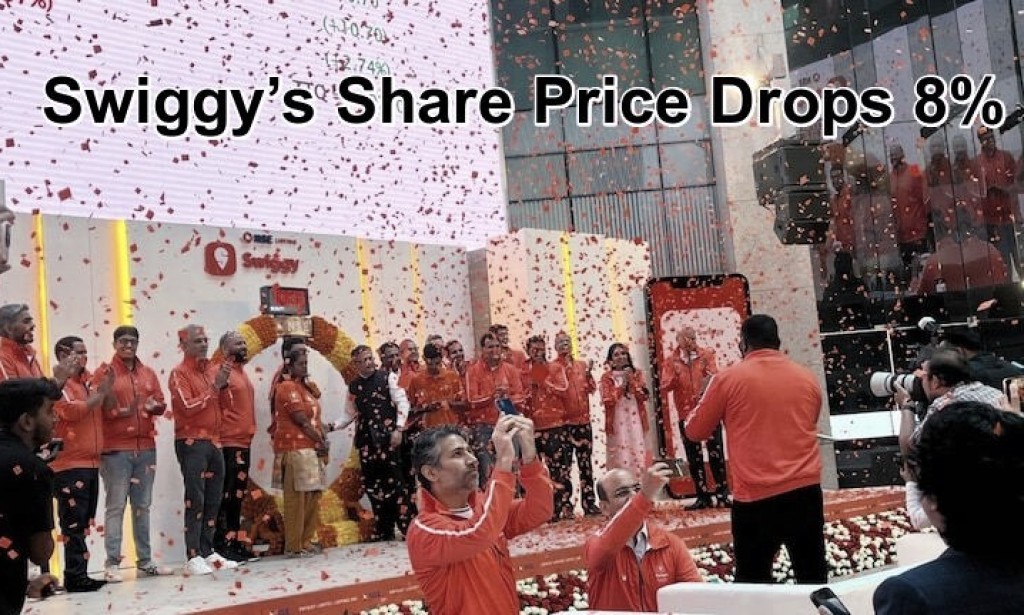
Swiggy, a major player in India's food delivery and quick-commerce sector, has gained attention not only for its rapid growth and diverse service offerings but also for its performance in the stock market. However, on November 14, 2024, Swiggy’s share price experienced a sudden decline, closing nearly 8% lower. This drop has raised eyebrows and questions among investors and industry experts. What drove this significant drop, and does it signal potential trouble for investors? In this article, we’ll break down the key reasons behind Swiggy’s share price decline and explore if this could be a temporary market reaction or an indicator of a larger trend.
Overview of the Recent Drop
The drop in Swiggy’s share price was notable, as it marked one of the largest single-day declines for the company in recent months. Swiggy’s stock opened the day on a slightly lower note but saw accelerated losses throughout the trading session. By the close of trading, Swiggy’s shares had fallen close to 8%, signaling a strong reaction from the market. In comparison, similar companies in the food-tech and e-commerce space either remained stable or saw minor fluctuations, which places Swiggy’s performance under an even brighter spotlight.
Possible Reasons Behind the Drop
Several factors could have contributed to Swiggy’s steep decline in share price. Here are a few possible explanations:
1. Earnings Reports and Profitability Concerns
Swiggy may have recently released quarterly earnings that did not meet market expectations. If earnings reports indicate lower revenue growth, higher operating expenses, or reduced profitability, investors may become concerned about the company's financial stability. With rising competition in India’s food delivery and grocery sectors, maintaining profitability is becoming a greater challenge for Swiggy and its peers.
2. Increased Competition and Market Saturation
The Indian food delivery market has become highly competitive, with other players like Zomato and Dunzo expanding their offerings and presence. The quick-commerce segment, where Swiggy has invested heavily, is also becoming crowded. If investors feel that Swiggy might struggle to retain its market share or experience slowing growth, they may be inclined to sell off shares, impacting the stock price.
3. Regulatory Changes and Policy Uncertainties
There may be regulatory updates that could impact food delivery companies. From new rules around data privacy to stricter guidelines for delivery gig workers, changes in regulation can introduce uncertainties for companies like Swiggy, affecting investor confidence. Any recent policy shifts could potentially weigh on Swiggy’s profitability, leading to a sell-off.
Short-term and Long-term Outlook
In the short term, the share price decline could simply be a market reaction to recent news, earnings, or investor sentiments. Often, a single day’s drop does not imply a long-term issue; instead, it may reflect a temporary shift in market sentiment.
Looking at the long-term perspective, Swiggy’s position in India’s food delivery and quick-commerce markets remains strong. With a significant customer base and continuous expansion in service offerings, Swiggy has growth potential. However, the company will need to manage profitability challenges, especially as market competition increases. If Swiggy can innovate and capture new market opportunities, it may strengthen its long-term growth prospects.
Should Investors Be Concerned?
For current investors, it’s important to view this 8% decline in context. If the drop is primarily driven by market sentiment or short-term factors, it may not necessarily indicate an issue with Swiggy’s fundamental business model. However, if the decline is due to more structural challenges—such as persistent competition, market saturation, or regulatory hurdles—investors may want to approach with caution.
Some analysts believe that this dip might present a buying opportunity for those who are optimistic about Swiggy’s ability to recover and grow in the long term. However, for more conservative investors, it may be wise to monitor the stock's movement over the coming weeks and assess whether Swiggy can overcome these challenges.
Conclusion
Swiggy’s recent share price decline may have surprised investors, but it is not necessarily a reason to panic. While an 8% drop is significant, it’s important to analyze whether it reflects a short-term market reaction or a potential shift in Swiggy’s business outlook. Investors should weigh the risks and potential rewards before making decisions and consider Swiggy’s long-term growth potential in the competitive food delivery and quick-commerce space.
As the market continues to react, Swiggy’s performance over the next few quarters will likely provide more insights into its stability and future direction. For now, investors may want to stay informed and evaluate their positions based on both immediate reactions and broader industry trends.

You must be logged in to post a comment.